FUNGARIUM grow : shape : join
Fachprojekt 3, BD
Prof. Anne Carina Völkel
Wednesdays, 10:00 am
Room N014, Infanteriestraße
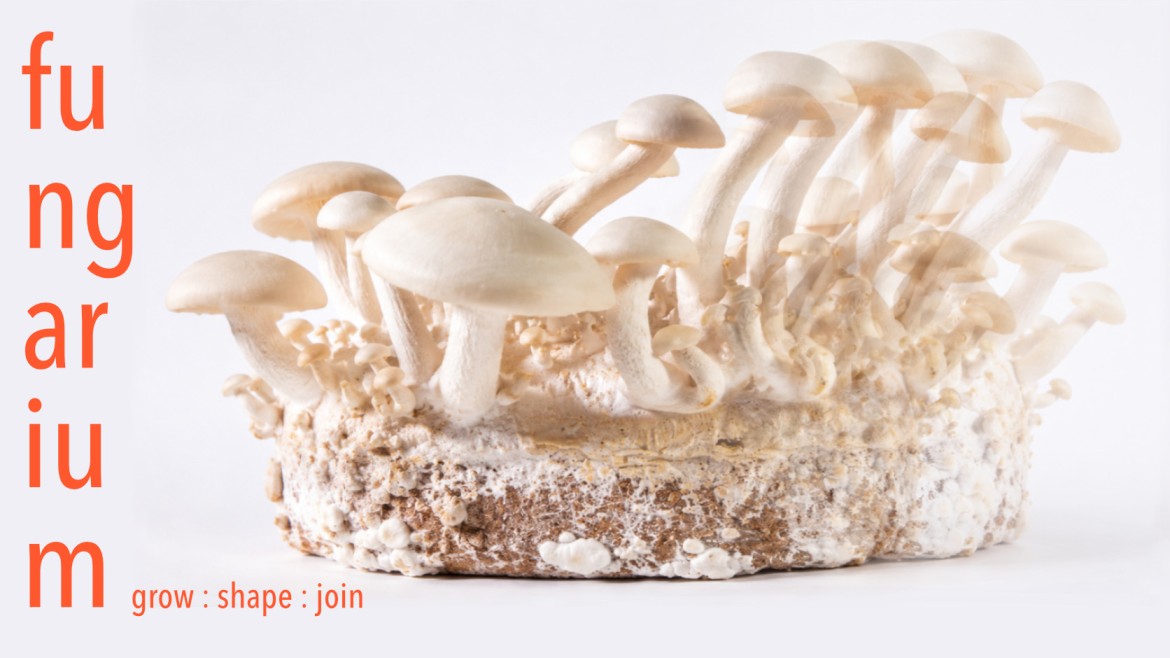
Fungarium (Latin: fungus = mushroom) is a collection of preserved mostly dried fungal specimens in combination with associated data for research purposes. Preserving fungal components and keeping them for later investigations created the foundation for the comprehensive study of fungal diversity. Fungal specimens continue to help science describe unknown species, to understand and to make use of the distribution and interactions between plants and fungi. Comprehensive collections exist worldwide, and yet it is estimated that still around 95% of the fungal species on Earth remain unknown.
Fungi exist in the soil, in the air, on surfaces, some on or in our bodies, while others live in symbiosis with plants and trees and supply them with nutrients and water. In short, they are almost everywhere and underpin all life on earth and therefore also us.
Since ancient times people have been using yeasts and fungi unconsciously to produce bread, beer, wine and cheese. In 1919, the company Pfizer in the USA succeeded for the first time in producing citric acid on an industrial scale through fermentation from the black mold Aspergillus niger. Thus, modern fungal biotechnology was born and has continuously developed in different areas. In biotechnology, it was recognised that fungi are natural cell factories by converting food into usable energy for building materials and cells through their metabolism and thereby changing the quality and properties of other organisms or products. These processes have become firmly established in a wide range of industrial applications, like the production of beverages, food, medicines, enzymes and biofuels.
For several years now, the potential of fungi has increasingly come into focus in the fields of art and design. In collaboration with science, the replacement of mineral oil-based products with new, bio-based products and their fields of application is being explored. Fungi or rather their mycelium (root network) can already be found in the development of furniture, textiles, packaging and several building materials.
Fungal materials are supposed to be stable, durable, highly water-repellent, sound-absorbing, flame-resistant, and thermally insulating. All qualities that also play an important role in building design and construction.
The question therefore is: Can buildings or parts of them be built from fungi in the near future and open new possibilities in the construction sector with regard to a circular bioeconomy?
In our FUNGARIUM, we will not think of fungi as a dry matter. Using the methods of GROW : SHAPE : JOIN we will grow our own products and test their potential applications in our laboratory, working towards the design of a future lab.
The module will be offered in German or English as required.
Everyone who enjoys and values experimentation is welcome to join the course.
First meeting and introduction:
Wednesday, 07.10.26, 10:00 am, room N014, Infanteriestraße